Palapa Satellite
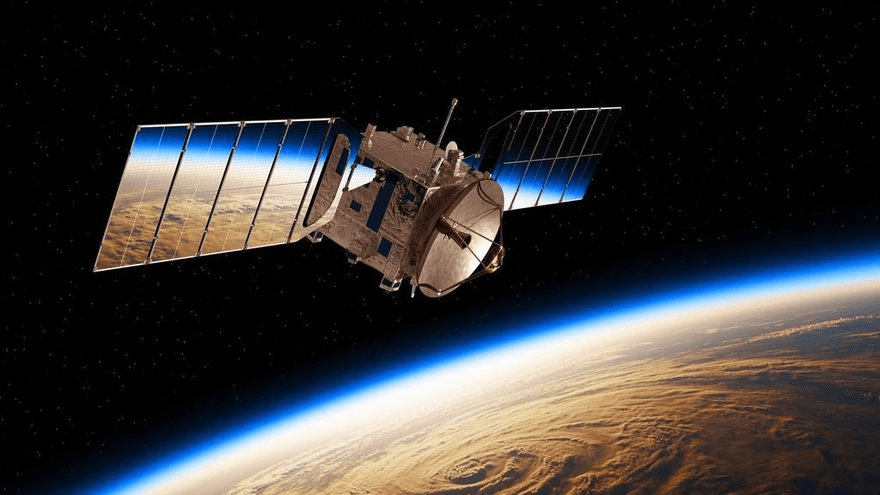
A satellite is a celestial body that has no light source of its own and moves around a particular planet while tracking the planet in orbit over certain rotation and revolution cycles. A satellite is a non-artificial space object that orbits a planet or a body larger than itself. For example, the moon is the earth's satellite. Its functions are to provide light at night, to affect the balance of sea water, to broadcast television, mobile phone, and internet signals, and to transmit and receive communication signals.
Forty-four years ago, on July 8, 1976, Indonesia became the first to launch its own national satellite, the Palapa satellite. The Palapa satellite was launched by NASA's Delta 2914 rocket from Kennedy Space Center at Cape Canaveral, USA, and then flew at an altitude of 30,500 kilometers at 83 degrees east longitude. The Palapa Generation A satellite had 12 transponders (devices that enable two-way communication) with a capacity of 6,000 voice connections or 12 TV channels. Palapa was 3.7 meters high, 1.9 meters in diameter, and weighed 574 kg. The Palapa satellite was expected to optimize the transmission of communication signals across the Indonesian archipelago and reach neighboring countries such as Malaysia, the Philippines, Singapore, and Thailand.
The existence of Palapa has propelled Indonesia onto the world stage, making Indonesia the third country in the world and the first developing country to successfully operate a Domestic Satellite Communication System (SKSD). Indonesia outpaced other European and Asian countries, with only two countries currently having domestic satellite systems, the United States and Canada. Undoubtedly, this made Indonesia a pioneer in the ASEAN region, and countries in the Southeast Asia region also use the Palapa satellite's signal beams.
The Palapa satellite was operated by Perusahaan Telekomunikasi Umum (Perumtel), now PT Telkom Indonesia, and was manufactured by Boeing Satellite Systems (formerly Hughes Space and Communication Company). The Palapa satellite launched at that time was the A1 generation with an orbital life of 7 years. Other generations later emerged, but because of their limited lifespans, some became unusable and were replaced by others. As of 2020, there were 11 Palapa satellites recorded, namely Palapa A1 (1976), Palapa A2 (1977), Palapa B1 (1983), Palapa B2 (1984), Palapa B2P (1987), Palapa B2R (1990), Palapa B4 (1992), Palapa C1 (1996), Palapa C2 (1996), Palapa D (2009), and Palapa N1 ___ which failed to reach orbit after being launched from the Xichang Satellite Launch Center (XSLC) in Xichang, China, in 2020 and was planned to be operated by PT Palapa Satelit Nusa Sejahtera (PSNS).
The name Palapa itself comes from the Palapa Oath of Patih Gajah Mada in Majapahit in 1336. He resolved not to stop fasting and abstaining from pleasures until he had united the territories of the archipelago. In keeping with Gajah Mada's oath, the Palapa satellite is a powerful tool for integrating the vast archipelago by reducing the distances between regions to support national development. Because of this close "distance", Palapa enables the government's information gateway. Whenever a problem occurs, you do not need to wait long to get valid information, which allows resolution steps to be taken more quickly.
The Palapa project, which cost Rp 561 billion at the time, brought great communication and broadcasting benefits to the Indonesian people. Palapa not only supported inter-city telephone, telex, telegram, and fax services in Indonesia, but was also the main infrastructure for delivering national television programs watched by Indonesians from Sabang to Merauke. Besides Televisi Republik Indonesia (TVRI), Palapa also played a role in the emergence of private television channels in Indonesia. Thanks to Palapa, together with Radio Republik Indonesia (RRI), private radio stations could reach radio networks in many cities with a single footprint.
The earlier Palapa generations have been replaced by more powerful generations of communication satellites, such as Telkom-2, launched in 2005. It can be used not only as a backbone for domestic long-distance dialing (DLD), international direct dialing (IDD), the Internet, and military communication transmission, but also for television, radio broadcasting, and conference calls. This includes Internet access, distance learning, and VSAT (Very Small Aperture Terminal) businesses for banking and mining.
Let's get to know the study program better Bachelor of Telecommunication Engineering and visit the official website ITTelkom Jakarta yes!
Written by Izza Raudha Alwafa
