Internet of Things
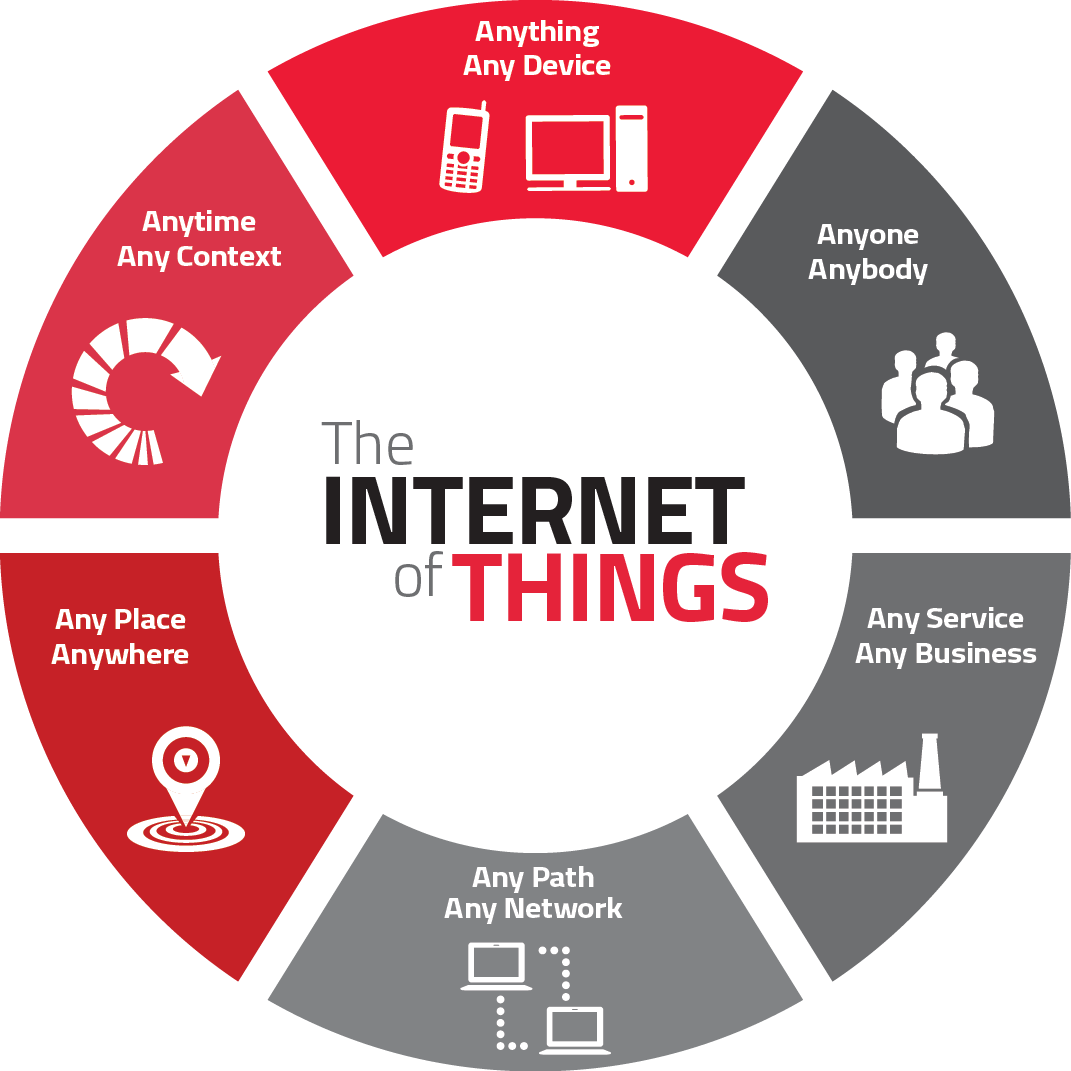
Internet of things (IoT) is a concept in which a thing or object is embedded with technologies such as sensors and software to communicate, control, connect, and exchange data with other devices as long as it remains connected to the internet. IoT can be defined as the connection of objects/devices such as TVs, smartphones, and sensors to the Internet in order to connect devices in a smart way, enabling new forms of communication between devices, system components, and humans. IoT integrates traditional domains including control and automation systems, embedded system, and wireless sensor networks for Device-to-Device (D2D) communication over the internet.
The IoT architecture consists of several technologies that support IoT. The IoT architecture consists of several layers, namely:
- Sensor Layer which is the lowest layer, consisting of smart object integrated with their sensors.
- Gateway and Network Layer where a large volume of data is generated by small sensors, requiring high performance and a robust, strong wired/wireless network infrastructure.
- Management Service Layer covers information through security controls, analytics, and device management.
- Application Layer covers various IoT system applications.
IoT is transforming our society anywhere and at any time. Recently, standard web services have become the most widely adopted technology. In the future, innovative technologies and standards will need to address privacy and security features for networks, users, data, and applications. For network protocol security, IPv6 (Internet Protocol Version 6) is the next-generation protocol. This protocol includes security controls and addressing information for routing packets over the Internet.
Let's get to know the study program better Bachelor of Telecommunication Engineering and visit the official website Telkom University Jakarta Campus yes!
