
What is Electricity?
Electricity is a form of energy. Electricity is the flow of electrons. All matter is made of atoms, and atoms have a center called the nucleus. The nucleus contains positively charged particles called protons and uncharged particles called neutrons. The nucleus is surrounded by negatively charged particles called electrons. The negative charge of an electron equals the positive charge of a proton, and the number of electrons in an atom is usually equal to the number of protons. When the balancing force between protons and electrons is disturbed by an external force, an atom can gain or lose electrons. When electrons are “lost” from an atom, the free movement of those electrons forms an electric current.
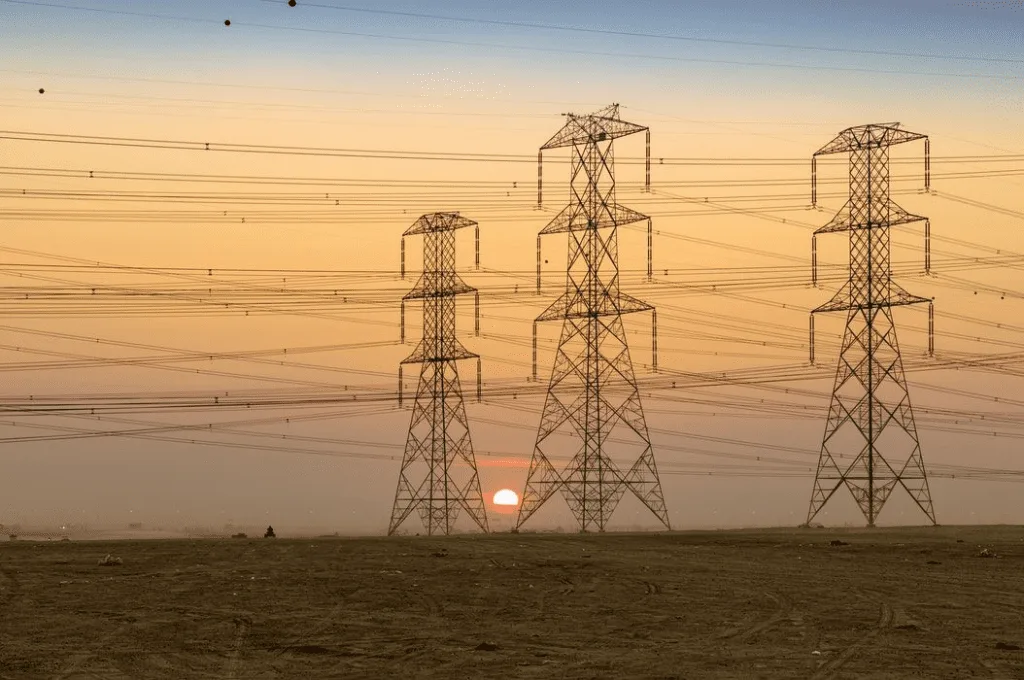
Electricity is a basic part of nature and one of the most widely used forms of energy. Electricity, a secondary energy source, is obtained from the conversion of other energy sources, such as coal, natural gas, petroleum, nuclear power, and other natural sources called primary sources. Many large and small cities were built along waterfalls (a main source of mechanical energy) that turned waterwheels to do work. Before electricity generation began about 100 years ago, homes were lit with kerosene lamps, food was cooled in iceboxes, and rooms were heated with wood- or coal-burning stoves. Starting with Benjamin Franklin experimenting with a kite on a stormy night in Philadelphia, the principles of electricity gradually came to be understood. In the mid-1800s, everyone's life changed with the invention of the electric light bulb. Before 1879, electricity had been used in arc lamps for outdoor lighting. The invention of the light bulb used electricity to bring indoor lighting to our homes.
How Are Transformers Used?
To solve the problem of transmitting electricity over long distances, George Westinghouse developed a device called the transformer. Transformers allow electricity to be transmitted efficiently over long distances. This makes it possible to supply electricity to homes and businesses located far from the power plant.
Although electricity is vital in our daily lives, most of us rarely think about what life would be like without it. But like air and water, we tend to take electricity for granted. Every day, we use electricity for many functions — from lighting and heating/cooling our homes to powering televisions and computers. Electricity is a form of energy that is controllable and convenient to use in heat, light, and power applications.
Today, the United States (US) electric power industry is structured to ensure that an adequate supply of electricity is available to meet all demand at any given time.
How Is Electricity Generated?
An electric generator is a device for converting mechanical energy into electrical energy. The process is based on the relationship between magnetism and electricity. When a wire or other electrically conducting material moves across a magnetic field, an electric current is produced in the wire. Large generators used by the electric utility industry have stationary conductors. A magnet attached to the end of a rotating shaft is placed inside a stationary ring of conductor wrapped with one long, continuous wire. As the magnet rotates, it induces a small electric current in each section of wire it passes. Each section of wire forms a small, separate electrical conductor. All the small currents from the individual sections add up to one current of considerable size. This current is what is used for electric power.
How Are Turbines Used to Generate Electricity?
Electric utility power plants use turbines, engines, waterwheels, or other similar machines to drive electric generators, or devices that convert mechanical or chemical energy into electricity. Steam turbines, internal combustion engines, gas combustion turbines, water turbines, and wind turbines are the most common methods of generating electricity.
Most electricity in the United States is generated by steam turbines. A turbine converts the kinetic energy of a moving fluid (liquid or gas) into mechanical energy. Steam turbines have a series of blades mounted on a shaft against which steam is forced, thus rotating the shaft connected to a generator. In a fossil-fueled steam turbine, the fuel is burned in a furnace to heat water in a boiler to produce steam.
Coal, petroleum (oil), and natural gas are burned in large furnaces to heat water to produce steam that in turn pushes the turbine blades. Did you know that coal is the largest primary energy source used to generate electricity in the United States? In 1998, more than half (52%) of the 3.62 trillion kilowatt-hours of electricity in the country used coal as its energy source.
Besides being burned to heat water into steam, natural gas can also be burned to produce hot combustion gases that pass directly through a turbine, spinning the turbine blades to generate electricity. Gas turbines are generally used when electric utility demand is high. In 1998, 15% of the country's electricity used natural gas as fuel.
Petroleum can also be used to produce steam to spin turbines. Residual fuel oil, a product refined from crude oil, is often the petroleum product used in power plants that use petroleum to produce steam. Petroleum was used to generate less than three percent (3%) of all electricity generated in US power plants in 1998.
Nuclear power is a method in which steam is produced by heating water through a process called nuclear fission. In a nuclear power plant, the reactor contains a core of nuclear fuel, primarily enriched uranium. When atoms of uranium fuel are hit by neutrons, they undergo fission (splitting), releasing heat and more neutrons. Under controlled conditions, these other neutrons can strike more uranium atoms, splitting more atoms, and so on. In this way, fission can occur continuously, forming a chain reaction that releases heat. The heat is used to turn water into steam, which in turn spins a turbine that generates electricity. In 2015, nuclear power was used to generate 19.47 percent of all the country's electricity.
In 2013, hydroelectric power accounted for 6.8 percent of US electricity generation. It is a process in which flowing water is used to spin a turbine connected to a generator. There are basically two types of hydroelectric systems that produce electricity. In the first system, flowing water accumulates in a reservoir created by a dam. The water falls through a pipe called a penstock and puts pressure on the turbine blades to drive the generator to produce electricity. In the second system, called run-of-river, the force of the river current (rather than falling water) puts pressure on the turbine blades to produce electricity.
Other Generation Sources
Geothermal power comes from heat energy buried beneath the earth's surface. In some regions of the country, magma (molten material beneath the earth's crust) flows close enough to the earth's surface to heat underground water into steam, which can be harnessed for use in steam turbine plants. In 2013, this energy source generated less than 1% of the country's electricity, although an assessment by the US Energy Information Administration stated that nine western states have the potential to generate enough electricity to supply 20 percent of the country's energy needs.
Solar power comes from the energy of the sun. However, solar energy is not fully available and widespread. The processes used to generate electricity using solar energy have historically been more expensive than using conventional fossil fuels. Photovoltaic conversion generates electric power directly from sunlight in a photovoltaic (solar) cell. Solar thermal electric generators use the radiant energy of the sun to produce steam to drive turbines. In 2015, less than 1% of the country's electricity was supplied by solar power.
Wind power comes from converting the energy contained in wind into electricity. Wind power, like solar, is usually an expensive source of electricity production. In 2014, it was used for about 4.44 percent of the country's electricity. Wind turbines are similar to ordinary windmills.
Biomass (wood, municipal solid waste (garbage), and agricultural waste, such as corn cobs and wheat straw) is another energy source for generating electricity. These sources replace fossil fuels in the boiler. Burning wood and waste produces steam that is usually used in conventional steam power plants. In 2015, biomass accounted for 1.57 percent of the electricity generated in the United States.
Electricity produced by a generator is sent through cables to a transformer, which changes the electricity from low voltage to high voltage. Electricity can be transmitted over long distances more efficiently using high voltage. Transmission lines are used to carry electricity to substations. Substations have transformers that change high-voltage electricity into low-voltage electricity. From the substation, distribution lines carry the electricity to homes, offices, and factories that require low-voltage electricity.
How Is Electricity Measured?
Electricity is measured in units of power called watts. The name was given in honor of James Watt, the inventor of the steam engine. One watt is a very small amount of power. It takes nearly 750 watts to equal one horsepower. One kilowatt represents 1,000 watts. One kilowatt-hour (kWh) equals the energy of 1,000 watts working for one hour. The amount of electricity generated by a power plant or used by a customer over a certain period of time is measured in kilowatt-hours (kWh). Kilowatt-hours are determined by multiplying the number of kW required by the number of hours of use. For example, if you use a 40-watt light bulb for 5 hours a day, you have used 200 watt-hours, or 0.2 kilowatt-hours of electrical energy.
Well, that is more or less “What Is Electricity?”. Let's get to know our study program better Bachelor of Telecommunication Engineering and visit the official website Telkom University Jakarta Campus yes!
Written by Dzul Rahman
