
Multibeam antenna
Multibeam antenna
A multibeam antenna is a type of antenna designed to generate and steer several electromagnetic signal beams simultaneously. They are used in various communication applications, especially satellite communications and wireless networks.
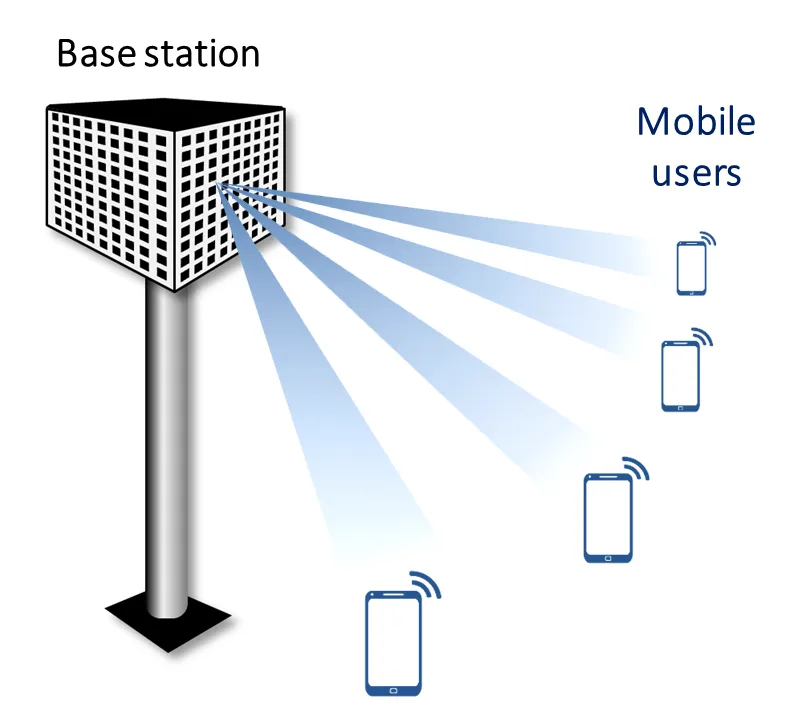
multibeam antenna
The main feature of a multibeam antenna is its ability to transmit or receive several signal beams at the same time. This allows them to communicate with several satellites or devices without physically changing the antenna's position. As a result, they can cover a wide area and serve many users or locations efficiently.
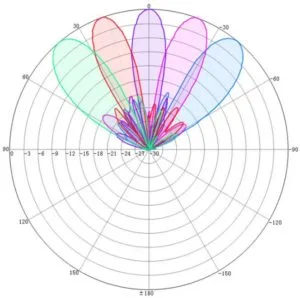
Multibeam antennas often use technologies such as phased arrays, in which multiple radiating elements are controlled by phase shifting to steer the beam electronically. They can also use reflector antennas with several feed horns or arrays.
The main advantages of multibeam antennas are high capacity, resistance to interference, and the ability to correct signals degraded by interference or atmospheric conditions. This makes them a popular choice for modern communication systems that require reliable and efficient connectivity in various environments.
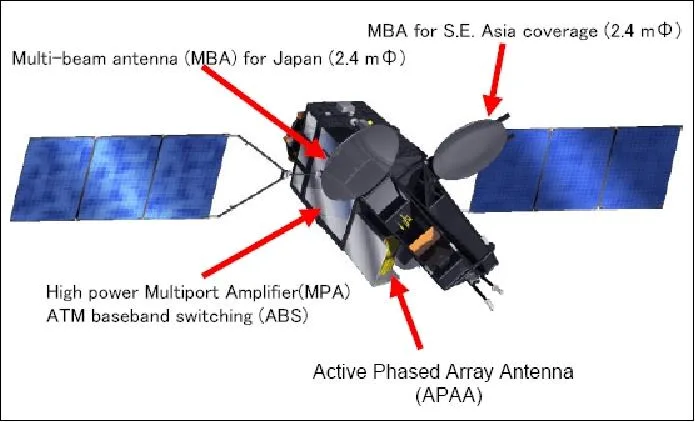
In satellite communication applications, multibeam antennas enable service providers to deliver broadband services to many customers over a wide area, while in wireless networks they can be used to provide fast and reliable connectivity to many devices in metropolitan or rural areas.
There are several commonly used types of multibeam antennas, depending on the application and specific needs of the communication system. The following are some types of multibeam antennas that are frequently used:
- Phased Array AntennaThis is the most commonly used type of multibeam antenna. A phased array uses a series of radiating elements individually controlled by electronics to generate and steer signal beams in various directions without physically moving the antenna. They are very flexible and can be steered electronically very quickly, making them ideal for applications such as satellite communications, radar, and wireless networks.
- Reflectarray AntennaThis antenna is similar to a conventional parabolic reflector antenna, but instead of a continuous reflective surface, it uses a surface made of passive elements called “parchment” or “patch” elements arranged in a complex pattern. This allows the antenna to achieve a reconfigurable radiation pattern to steer signals in various directions.
- Lens AntennaA lens antenna uses the principle of focusing electromagnetic signals with a dielectric lens to produce several signal beams. They are commonly used in satellite communication systems to produce focused signal beams on various locations on the Earth's surface.
- Holographic AntennaA holographic antenna is an antenna that uses holography techniques to produce complex radiation patterns. They can produce multiple signal beams simultaneously by using the diffraction of electromagnetic waves on the antenna's surface structure.
Each type of multibeam antenna has its own advantages and disadvantages depending on the specific application and operating conditions. Choosing the right type of antenna depends heavily on the needs of the desired communication system.
